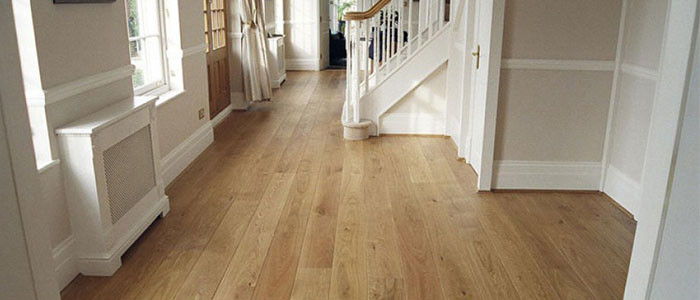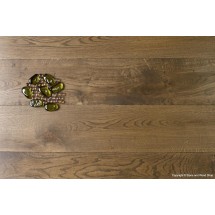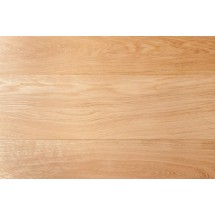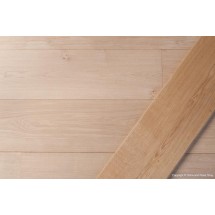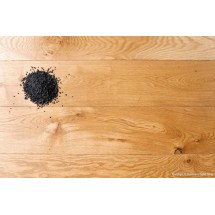
If you are planning a new Oak floor you may well have some questions about what product to use or how the installation is best done. We have years of experience so avoid the common pitfalls by taking advantage of our expertise so call us today! We look forward to speaking to you, in the meantime please take a browse through our...
Guide to buying, installing and living with Engineered Oak Flooring
Choosing Your Engineered Oak flooring
There is no shortage of choice when choosing engineered Oak flooring so thinking about the following options will help you make the right decision.
Board Size - What width of plank will best suite your room?
Perhaps you would like to mix widths - some narrow and some wider engineered boards. Mixed widths tend to look more casual while single width boards look more formal - particularly in widths up to 150mm.
Check what lengths are on offer - 1860mm long is the standard length of engineered Oak boards originating from the many Chinese suppliers. If you want longer engineered Oak boards these are harder to find but Stone and Wood Shop offers lengths of 2200 or 2400 mm as standard and widths from 180 mm to 300 mm.
What thickness?
It's basically either 15 mm or 20 mm. Note the thicker engineered boards are essential if you are fixing to joists, they are also less prone to feeling at all 'springy' when laid as a floating floor. The thick engineered boards will typically have the more substantial 6 mm Oak wear layer.
Which Finish?
Typically you can buy Engineered Oak flooring either pre finished at the factory with oil or lacquer or supplied unfinished.
Oiled - Go for this if you want the most natural looking engineered Oak floor and benefit from the long term maintainability of this finish. Small scratches can easily be made to disappear with a drop of oil.
Lacquered - Very straightforward to look after but small repairs are not possible without the help of a French polisher. Choose this if you want the very smooth, Zingy look.
Unfinished - Good quality engineered Oak products come 'sanded' so just the finishing is required on site. There is no cost saving in buying unfinished engineered Oak boards when you take into account the extra labour involved but go for this option if you plan to colour the floor to your taste.
Cost
Narrow engineered Oak flooring costs less than the wider planks and the more character and knots in the product the cheaper it will be.
You will pay a premium for 'select grade' engineered Oak flooring. It is worth pointing out that 'select' does not imply a better quality product necessarily - the same manufacturer will offer different selections of engineered Oak - rustic, knotty etc but the quality of construction will be the same.
Do keep in mind that as usual the cheapest product rarely represents the best value for money - this goes for engineered Oak floors as well.
A quality engineered Oak floor will last for many years so look for value and don't scrimp.
Buying engineered Oak flooring
Buying engineered Oak flooring online will certainly mean you will be getting the cheapest prices - you must however establish quality, so ask for a sample and check if the company uses the board for their own installation work.
When you are ordering your engineered Oak floor remember also to buy underlay, finishing oils etc and care products - don't 'leave it until later' as transportation is expensive. Order everything at once. See our Wood Ancillaries page for more information.
When ordering your Engineered Oak Flooring remember to always add 10% meterage for cuts, selection and wastage.
When arranging a delivery date for your new engineered Oak remember that someone will need to be at home to sign for the delivery.
Installation
Installing Engineered Oak flooring can be a job for the DIY enthusiast but different fitting methods require different levels of skill and knowledge.
There are detailed instructions for laying engineered Oak boards on the stone and wood shop website.See our engineered oak flooring installation page for more information.
Here is an outline of the most common installation methods.
Engineered Oak boards as a structural floor
In this situation the engineered Oak boards are fixed by 'secret nailing' (see below) them to your timber joists to form a new floor or to replace existing floor boards. The engineered Oak flooring must be suitable for the task, so normally 20 mm thick and the joists should be spaced no wider than 400 mm centres.
As a floating floor
Engineered Oak boards are built in layers rather than machined from one solid piece of Oak. There are a number of ways of doing this but the result is an 'engineered' board which is sufficiently stable that it does not need to be fixed down as you would for a solid board. The engineered boards can be glued together and laid on an underlay. This is a 'floating floor'. See our video on floating floor installations.
By secret nailing
Engineered Oak boards can be fixed to existing floorboards, plywood or chipboard decks by 'secret nailing'. This involves using a nail gun which fires special nails at an angle through the tongue of the board and into the subfloor beneath. The 'groove' of the next engineered board, when installed hides the point where the nail is driven in- hence the term 'secret nailing'. Nail guns suitable for fixing engineered Oak flooring can be found at most hire shops. Use 38 mm nails for 15 mm thick engineered boards and 50 mm nails for 20 mm boards and don't be tempted to use the ' Paslode ' type builders gun to fix your engineered Oak as these smooth, non serrated nails are not suitable. See our video on laying engineered oak flooring by secret nailing.
Stick down method
This method can be used on plywood & chipboard but when laying Engineered Oak boards on a timber background the ' secret nailing ' method is the most straight forward way of achieving a ' fixed down ' floor. Similarly if you want to 'fix' your floor but have a concrete subfloor you will need to 'stick down' to the subfloor.
We recommend a method which combines an acoustic underlay with a very powerful flexible adhesive, details of which are on the stone and wood shop web site.
When sticking any solid or engineered Oak board it is very important to ensure the concrete or sand and cement screed is fully dried.
See our video on how to stick down oak engineered flooring.
Care and maintenance of Engineered Oak floors
The importance of using suitable products to care for your engineered Oak floor cannot be over emphasised. This is particularly true for oiled finishes where the use of an appropriate wood soap enhances the protection and beauty of the product over time whilst inappropriate cleaners can at best make the engineered Oak look very dull and at worst gradually break down the oil which in turn leaves an otherwise highly durable product open to dirt ingress and staining.
Stone and wood shop recommends and sells Osmo products for cleaning and maintaining engineered Oak flooring.
Here are a few tips
Always vacuum an engineered Oak floor before washing - this removes most of the dust and grit before you start.
Use a flat bottomed mop rather than one of the 'stingy' items which tend to drizzle dirty water around- Osmo mops are perfect.
Wring the mop out so it is just damp and not dripping wet. Neither solid or engineered Oak floor benefit from surplice moisture.
Use two buckets when cleaning. Mop the soap mixture in one bucket onto the floor and rinse the mop in another bucket of clean water (or the kitchen sink) before putting it back in the soapy mix and continue.
To protect your flooring from scratches
Fit self adhesive soft pads to table and chair legs to protect any engineered Oak floor from surface scratches and scrapes.
Engineered Oak Flooring
Maintaining an Engineered Oak Floor
Why Choose Engineered Oak Over Laminate